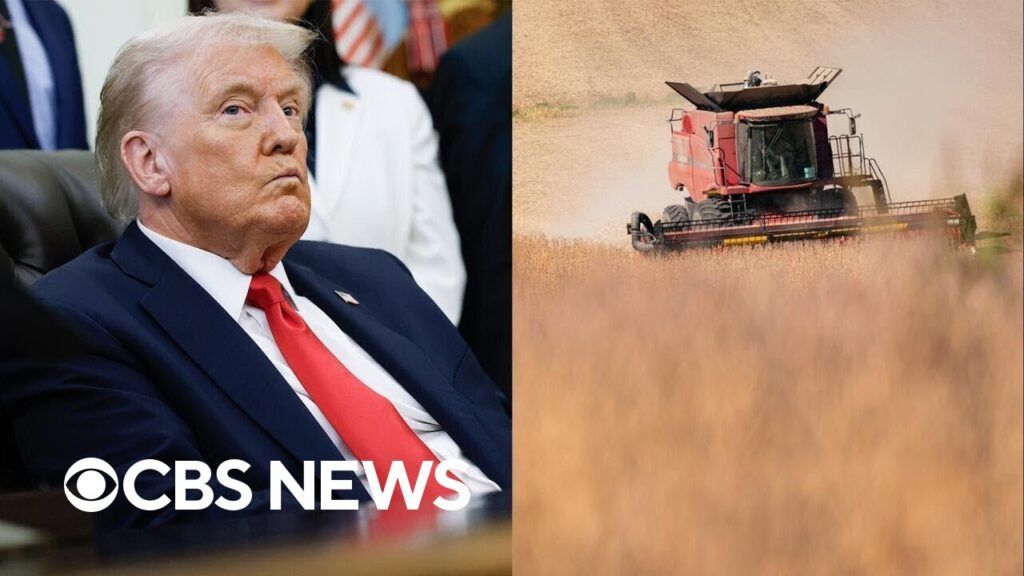

President Donald Trump is expected to unveil a $12 billion farm aid package on Dec. 8, aimed at stabilizing farmers affected by weak crop prices, rising production costs and the long-term impact of global tariff disputes.
The announcement — scheduled for 2 p.m. ET at the White House — will feature Agriculture Secretary Brooke Rollins, Treasury Secretary Scott Bessent, and growers representing major U.S. commodities such as soybeans, cattle, cotton and potatoes.
A White House official said the program is designed to provide immediate, targeted financial relief as farmers continue to experience declining profits and shrinking export markets.
White House: Biden-Era Trade Deficits Hurt Farmers
White House spokesperson Anna Kelly said Trump’s new aid plan demonstrates his commitment to “rebuilding America’s agricultural strength” and reversing what she called a $1.2 trillion trade deficit and soaring farm costs under the previous administration.
“Our farmers will finally have the support they need to bridge the gap between Biden’s failures and the president’s successful policies taking effect,” Kelly said.
What’s Inside Trump’s $12 Billion Farm Aid Plan?
According to officials familiar with the proposal, the assistance package includes:
➡️ $11 Billion — Farmer Bridge Assistance Program
A major share will support row-crop farmers, including soybean, corn, wheat and cotton growers. This new program provides one-time direct payments to help offset losses caused by:
- Foreign government trade actions
- Tariffs and retaliatory tariffs
- Market disruptions and falling export demand
➡️ $1 Billion — Support for Specialty Crops
The remaining funds will be allocated by the USDA based on market conditions and the needs of farmers growing other crops.
Officials say the goal is to give farmers “certainty” as they sell this year’s harvest and plan crop decisions for 2026.
Farmers Say Aid Is “Urgently Needed” as Bankruptcies Rise
The American Farm Bureau Federation recently warned that farm bankruptcies are increasing nationwide. Production costs have outpaced revenues, squeezing profits for growers already hit by global trade tensions.
Soybean farmers were among the hardest hit this year after China — historically responsible for buying half of U.S. soybeans — slashed imports in response to U.S. tariffs. As a result, Chicago soybean futures fell below $11 per bushel on Dec. 8 for the first time since October.
Agriculture Secretary Rollins told reporters:
“Under the president’s direction, these farmers will have a backstop if we are not able to move these commodities out of the country.”
A Year of Heavy Losses for U.S. Agriculture
Farmers experienced billions in reduced exports after tariff battles disrupted long-standing markets:
- China shifted soybean purchases to Brazil and Argentina
- European and Asian markets tightened import restrictions
- Production costs for fuel, fertilizer and labor surged
Rollins said the administration’s trade strategy aims to reopen and expand foreign markets:
“I’m constantly talking about selling more soybeans, more corn, more of our products around the world.”
She added that Trump’s long-term goal is to reduce farmers’ dependence on government checks by improving global demand for American commodities.
Trade Deals and Market Uncertainty Continue to Shape Policy
Although Trump struck a new trade deal with China in October, uncertainty remains about the volume of agricultural imports China intends to resume.
The administration insists that new aid is necessary to keep American farms afloat until trade agreements fully take effect.